Friday, March 27, 2015

Bring on Spring!

March is not my favourite month in Thunder Bay. 

It's the time of year when everything is still frozen, and yet the snow pack recedes to reveal 6 months worth of accumulated sin.

The air is full of the smells of early spring. In my neighbourhood, that means liquid dog excrement above all others.


But that is not what this post is about. 

March is as important month because things start to happen in the environment. One major event I noticed when I first moved here was that the streets and side walks turn into rivers and streams. This is in stark contrast to the lawns and gardens, which remain under feet of snow pack. So what gives?


I noticed pretty quickly when I moved here that in March, the snow turns from a pristine winter white, to a rather ugly shade of dirt. Over the winter, grit spread on the roads and side walks accumulated in the snow pack, and then magically appeared again as the snow began to melt. I wondered if this darker shade of snow had anything to do with why side walks and boulevards appear to shed their winter coats so much faster than the gardens and lawns.

This year I decided to conduct an experiment on the garden to see if I could accelerate the spring thaw by applying used coffee grounds to the snow pack.

I collected a pile of used coffee grounds from my local coffee shop, and carted them to the garden where I found the beds still under a few feet of snow.

Taking a shovel, I located the garden paths and shovelled the snow off them and onto the garden beds themselves so I would have somewhere to walk as I applied the grounds.

The image below shows the job done and the coffee grounds sprinkled over where I think the garden beds are:


You can clearly see from these photos that there is still a good foot or two of snow on top of these beds. However, the side walks are clear, and grass is beginning to be seen in patches along the road sides.


You can also see from the photo below that some melt has happened at some point and solid ice is sitting in the garden pathways.


I left the garden like this and returned a week and a half later. There had been some warm weather followed by a cold snap and an inch or so of snow the day before I took the following photos.

The photo on the right clearly shows where the garden is. 

Everywhere I had sprinkled the coffee grounds there is no sign of any snow, and indeed, the top few inches of the garden beds have already thawed. 

There was also no sign of the snow that fell the day before.

Just as important to my experiment is that everywhere I did not sprinkle the used coffee grounds there is still a significant snow pack which I would estimate to be approximately a foot deep.


The photo above shows a clear demarcation between treated and untreated areas of the garden. 

So why did I choose to use used coffee grounds? 

Firstly, they are a dark colour, and my theory is that being dark in colour means that they absorb solar energy and transfer their heat back to the surrounding snow pack. The snow, being white, naturally reflects heat and is why the rest of the garden remains under snow.

 Used coffee grounds are also a rich organic source of Nitrogen and minerals. By utilising them in my garden, I am diverting an industrial waste stream that would otherwise go into land fill. 

I'll leave you with a short video on the use of used coffee grounds as a soil amendment and fertiliser:


Tuesday, January 6, 2015

What To Do When It's 40 Below Outside?

What To Do When It's 40 Below Outside?

The advantage of being stuck inside during the cold winter days means that there is ample opportunity to plan for the coming growing season and prepare for planting.

This year I plan to use seed tape in an effort to cut down on the time spent sowing seed and thinning seedlings.


But seed tape is unbelievably expensive, so I thought that a great indoor craft for the whole family would be to make seed tape ourselves.

I looked about and quickly identified toilet paper as a potential ideal candidate for this exercise. All I needed was seeds and glue.

A handy biodegradable glue can be made from simply heating a mixture of corn starch and water. To make things more interesting, we added a bit of food colouring to two batches of glue (one for each child), so we could easily distinguish one seed line from another. 

In this post, we made seed tape for parsnips (using purple glue) spaced at 1/2 inch intervals, along with radishes (using green glue) that we will utilise as a quick crop while the parsnips are growing.

We made the glue quite runny, (1 tsp of corn starch to 250 ml of water) so it would dispense easily from a squeeze bottle in small blobs. Make sure the glue is not lumpy, as the lumps tend to get stuck in the squeeze bottle nozzle, and then release in a flood of glue all over your paper. It makes quite a mess!

Since different seeds need different spacing, I put together a few spacing markers using wheel shaped objects I salvaged from the toy box, and attached rubber bands such that they were separated by the desired distance.  In the picture here, I have a marking wheel with 1/2 inch spacings.

We rolled the spacing marker on an ink pad, and then rolled it down a strip of toilet paper. In under a minute, we had dozens of evenly spaced marks as guides for placing the glue dots.


First off was the radish seed, which one of the kids glued to the toilet paper with green glue by first making a series of dots where the marks indicated and then placing a seed into the dot before it set hard.

Once that was complete, the second child used their purple glue to attach the parsnip seeds in a similar fashion.


Once all the seeds were attached to the paper, they were left to dry overnight.


The toilet paper I used was a two ply variety, and I discovered that once dry, I could still separate the sheets if I was careful. This meant that I could get two strips of seed tape from one strip of toilet paper.


I flipped the paper over, and made a line of glue dots 2 inches apart into which I placed lettuce seeds.

Once these dried, I separated the sheets and rolled them onto old toilet rolls.

So there you have it. Very cheap seed tape, and you have the added benefit of making up whatever combinations you desire.

Come spring, all I need to do is roll out the tape and cover it with a little soil or mulch. 

If the past two seasons have taught me anything, it's that sowing seed in Thunder Bay involves being hunched over in the wind and rain, struggling to get dry seeds out of their packet with wet fingers.


This spring things will be different!

Friday, January 2, 2015

Economics and Permaculture

Economics and Permaculture

Permaculture is as much about developing sustainable and non exploitative economies as it is about sustainable and non exploitative agricultural systems.

If permaculture is going to survive and thrive, it must also make economic sense from a business perspective.

There are two business models I am currently aware of that have been developed for the specific purpose of acting as a template that other people can utilise when going into industrial scale permaculture for profit.

The first model is the "Fiefdom" model developed by Joel Salatin. Joel is a multi-generational farmer who argues that young farmers can't get into the farming business unless old farmers are getting out. Meanwhile, old farmers can't get out unless young ones are getting in.

To address this conundrum, Joel recognised that young farmers want their own independent, yet connected, profitable enterprise (fiefdom) within a farming operation to which they are wholly responsible.

He maintains that a farm is not robust or sustainable unless it is generating at least 2 income streams, and the fiefdom model addresses this by creating many independent businesses within the overall farming operation.

A fiefdom is created when a business agreement in the form of a Memorandum of Understanding (MOU) is signed by the farmer and an independent business owner who wishes to operate within the farm. 

Provided that the business concept fits well within the network of other fiefdoms, and the farm as a whole, then a mutually beneficial agreement is reached and the new operation is introduced to the mini-economy.

On Polyface Farm, there are very few employees, as the people who work there operate their own business on the premises.

Here is a great article describing the fiefdoms on Polyface Farm and a link to Polyface Farm's guiding principles.


The second model is very new (as of April 2014) and is spear headed by Jack Spirko.

The initiative is called PermaEthos, which is a business that has created a template for establishing community based farming operations as profitable enterprises. 

There is a very good pod cast series available where Paul Wheaton (the Duke of Permaculture) interviews Jack on this new undertaking:
Part 1 and Part 2.


Their flagship proof of concept farm is called Elisha’s Spring Farm located in West Virginia and is currently in the early stages of establishment:


The main difference between these two models is that PermsEthos provides a template and a more traditional corporate structure to their organisation. For example, they have an advisory board, shareholders and a board of directors.

The fiefdom model is more of a conceptual design, and Polyface farm is a successful working implementation of this concept.

Whichever system you follow, be it your own, or one of the models described here, the role of debt in your enterprise will play a key part in determining your success.

Modern farmers are typically heavily indebted due to the huge capital outlays required for a modern operation. They indenture themselves, and their future generations to the bank, effectively enslaving themselves to the point of perpetual serfdom.

It doesn't have to be this way. There are alternatives. Social networks within your local community are as powerful as they ever were, and yet we seem to have discarded them and taken on the mantra of being "self made".

Why borrow half a million dollars from the bank to purchase a big fancy combine that you use half a dozen times a year when you could rent one from a neighbour? You pay for it as you need it, and you don't have the headaches of storage, maintenance, and insurance. 


Joel Salatin: Debt Free Farming


Tuesday, September 9, 2014

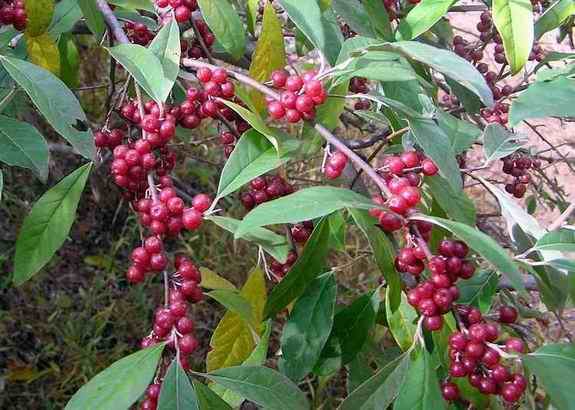
Plant of the Weekish - Silverberry

Silverberry

This shrub is Elaeagnus commutata, and is also referred to as Wolfberry, or Wolf Willow.

This is not to be confused with Goji, which is also referred to as Wolfberry. 

This is also not to be confused with Autumn Olive, which is also known as Silverberry.

They are entirely different plants and look completely different.

Now that we are all thoroughly confused, lets continue :-)

A close relative to Russian Olive, this particular shrub is a native of Canada, and is a valuable Nitrogen fixer in the boreal forest.

People typically place this plant in their yard as an ornamental feature, but it can be much more than a pretty face when put to work.

This shrub flowers in late May and provides hungry bees with an much needed source of food.

Growing to around 10 ft tall with a dense, thick foliage, Silverberry makes an excellent under story support species that can be used extensively as windbreaks, hedges, and chop n drop mulch, due to it's vigorous growth and coppicing ability. The bark is also a source of fibre for making rope and weaving baskets.

The wood itself produces an unpleasant smell when burned. This would probably be eliminated in rocket stoves, and mass heaters due to their high internal operating temperatures. However, there is little information about its suitability as a firewood due to this undesirable characteristic.

It produces a rather unattractive, yet edible fruit that can be used to make jelly. I have no idea what it looks and tastes like, so it might be more in the "survival food" category of value added products.

What is interesting with Silverberry, apart from what I've already written, is that fact that it is thorn less. Finally, a nitrogen fixing tree that doesn't require gloves to prune!

Widely considered as invasive, a permaculturist can put this plant to good use in a managed forest system. Furthermore, this plant does not tolerate shade, and will naturally die off as the primary tree species grow and the forest canopy develops. The very attributes that demonise this plant in the eyes of traditional agriculturists are essential in a regenerating forest ecosystem. 

It provides shelter and nutrients for the mature forest as it grows, and then gracefully steps aside at the appropriate time. It really is a rather polite plant.


Wednesday, September 3, 2014

Why Own Land When You Can Control It

Why Own Land When You Can Control It?

People seem to be fixated on the idea of owning land. They always have, and probably always will.

For a young person looking to work on the land, loading up with hundreds of thousands of dollars in debt just to acquire land is often a daunting prospect.


Before they even get to the starting gate, they're debt slaves to the bank, and the possibility of ever achieving financial independence is somewhere off in the distant future.

Throw in a gazillion dollars of more debt for tractors, combines, other farm equipment, and of course stock, and it quickly becomes obvious why there are so few young people getting into farming. Quite frankly, you would have to be insane.

Meanwhile the existing population of farmers are getting older and less physically capable of maintaining a profitable enterprise on their farm. The chances are they're also in debt with very few options for retirement. Many farmers have actually died, and their widows are left with a farm to run, but no idea how they will cope.

As a result, many farms slowly run down and eventually revert to some semblance of it's natural state as the forest reclaims the pastures.

I was listening to a podcast recently by a man named Greg Judy. He was speaking about how he went broke as a farmer in the late 1990's, and with less than $10 to his name he lost his farm and had to start over with nothing.

Today, Greg operates 12 farms totalling over 1,500 acres on which he runs over 1,000 head of cattle along with sheep and pigs.

The key to his success was the realisation that he didn't need to own the land or the livestock to be a farmer. 

Greg leased some land from an absentee land owner for a ten year period, and then rented his services to livestock owners who paid him a monthly fee per cow.

Because he could not afford farm equipment, he simply did without it, and changed his farming methods accordingly through the application of high intensity mob stocking and movable electric fences.


Even today, he doesn't own a tractor, doesn't make hay, doesn't fertilise, or irrigate. And yet the land he controls gets more fertile and productive every year.

Luckily for us, Greg wrote a book about how he achieves this, and you can purchase a copy from his web site and you can watch a handy book review below.


Granted, Missouri is a far cry from Thunder Bay. For example, he gets snow, but not for 6 months of the year.

However, I believe that many of the principles of his practice still apply. Lease instead of own, rent instead of buy, and stay out of debt as much as possible.

I'll finish with this... After Greg had been farming his leased farm for a year, the land owner turned up to see how things were going. When the tour was over, the owner took out the lease and tore it up in front of Greg, told him that they are going to forget about the arrangement they had, and drew up a new lifetime lease for him.

People who own land typically love the land, and have an emotional connection to it. 

Imagine the effect when they see someone being a good steward, and who demonstrates through their actions that they value the land in a similar way.


Tuesday, August 26, 2014

Using Nitrogen Fixing Plants

Using Nitrogen Fixing Plants

The use of Nitrogen fixing plants in your garden is widely known to be beneficial to your annual crops.

This is because the Nitrogen made available in the soil by these plants becomes available to the food crops.


The same concept applies in food forests where Nitrogen fixing trees and shrubs are used in place of cover crops.

What tends to be glossed over, or overlooked entirely is information on how to release this Nitrogen in a form that is available to other plants. 

Often, the reader is left to assume that the hard work performed by the bacteria, and the plant that they live in symbiosis with just give it away freely, and this is not the case.

Nitrogen compounds and sugars are exchanged between bacteria, and the root system of a Nitrogen fixing plant. This Nitrogen is stored within the roots of the plant until it is needed.

Some of this Nitrogen goes toward the production of foliage, but by far the most is used for the construction of seeds, and seed pods.

The only way that this Nitrogen can be made available to other plants is to prune the Nirtogen fixing plant.

Turning in a cover crop is pruning in its simplest form where the entire plant is killed, and its decomposition releases the desired nutrients.


Pruning a tree or shrub for the purpose of mulching is a more sophisticated process because it is desirable that the plant survive and grow back so that the process can be repeated many times.

When any plant is pruned above ground, there is an equivalent self-pruning done by the plant in the root network.

This means that Nitrogen is introduced through the decomposition of the foliage as well as the unseen decomposition of roots.

Actually, a plant will self prune it's root system in dry times as well, which means you can fertilise your garden simply by not watering your Nitrogen fixing plants.

Knowing that a plant self prunes its root system is useful because it is a highly efficient means for fertilising the soil. The roots decompose, leaving nutrient rich compost in a fine web through the soil without any need for digging or turning in. This compost not only provides nutrients, but also a network of corridors through which water can permeate.

With many nitrogen fixing plants, deciding when to prune is important from a Nitrogen release perspective.

For example, if you desire that most of the Nitrogen is to be within the soil, then the optimum time to prune is when Nitrogen is concentrated within the root system. This is just before the plant sets seed.

If you desire most of the Nitrogen is to be on top of the soil (as mulch or compost) then the optimum time to prune is when Nitrogen is concentrated in the foliage. This is when the seeds are approaching maturity.

These aspects of pruning and timing form the basis of chop n drop mulching practices in a food forest.


These techniques can be applied to a garden bed without having to till the soil. 

For example, bush beans are known to continue bearing beans so long as you pick them.

This means that the Nitrogen stored in their roots is not exhausted after the first flush.


There is little Nitrogen left anywhere in the plant once it finally dies after you pick all the beans, but if it is cut off at the soil level after its first flush, then the following results:
  • A bean crop can be obtained
  • A large portion of Nitrogen released to the soil without the need for tilling
  • Nitrogen rich foliage useful for composting
  • Space and time in the garden for a second crop 

Monday, August 25, 2014

Plant of the Weekish - Autumn Olive

Autumn Olive

Autumn olive is a close cousin to Russian Olive, and American Silverberry.

This large shrub grows to about 15 ft tall whose fragrant flowers produce a rich nectar and valuable bee fodder because they're one of the first trees to bloom in the springtime.

The resulting honey is light, mild, and with a floral aroma.

The dense, thorny foliage provides a wonderful protective environment for wildlife, an effect animal barrier, and useful windbreak.

The beautiful, abundant, edible, and highly nutritious fruit are prized by birds, and many people enjoy its tartness straight from the bush, or made into preserves to be served with cold cut meats or cheese.

Did I mention that it fruits abundantly? A mature bush can produce 650 Kg of fruit in a season. Yes, that is Kg, over half a ton. 


This shrub is a Nitrogen fixing plant, and can be coppiced for firewood, or chop n drop mulching. 

Interestingly, Autumn Olive doesn't produce suckers, but because birds just love the fruit, the seeds will be dispersed widely, resulting in its classification in many places as an invasive alien.


Now, when faced with an invasive alien, we need some way to control and manage it effectively.

Will Smith seems to be a little preoccupied at the moment with his own invasive aliens, and so we will have to make do with the next best thing:


Yes, it turns out that goats absolutely love eating Autumn olive. If you're blessed with acres and acres of Autumn Olive then it's time to get into the goat cheese business.

Now before everyone panics because they don't like goat cheese, I can tell you that this shrub doesn't tolerate shade well, and will die off when your primary trees mature. They won't  "choke" out trees like commonly thought, but they will smother weeds, grass, and wild flowers.

The reason it does this is because its primary role in the ecosystem is to pioneer the regeneration of the forest. And it does this very well.
It also happens to be one of the few shrubs that can tolerate growing next to black walnut, which has the potential to bear fruit in Thunder Bay provided that the correct micro climate is established.