Showing posts with label Plant of the Weekish. Show all posts

Tuesday, September 9, 2014

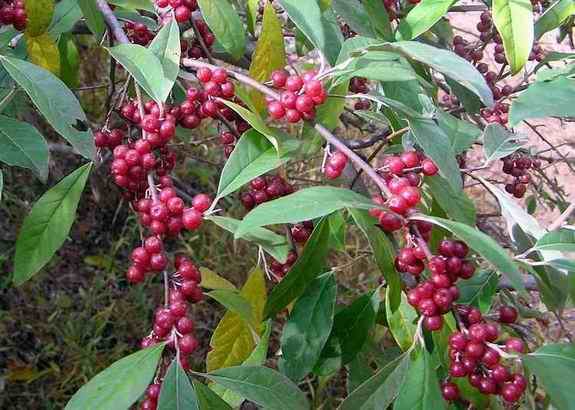
Plant of the Weekish - Silverberry

Silverberry

This shrub is Elaeagnus commutata, and is also referred to as Wolfberry, or Wolf Willow.

This is not to be confused with Goji, which is also referred to as Wolfberry. 

This is also not to be confused with Autumn Olive, which is also known as Silverberry.

They are entirely different plants and look completely different.

Now that we are all thoroughly confused, lets continue :-)

A close relative to Russian Olive, this particular shrub is a native of Canada, and is a valuable Nitrogen fixer in the boreal forest.

People typically place this plant in their yard as an ornamental feature, but it can be much more than a pretty face when put to work.

This shrub flowers in late May and provides hungry bees with an much needed source of food.

Growing to around 10 ft tall with a dense, thick foliage, Silverberry makes an excellent under story support species that can be used extensively as windbreaks, hedges, and chop n drop mulch, due to it's vigorous growth and coppicing ability. The bark is also a source of fibre for making rope and weaving baskets.

The wood itself produces an unpleasant smell when burned. This would probably be eliminated in rocket stoves, and mass heaters due to their high internal operating temperatures. However, there is little information about its suitability as a firewood due to this undesirable characteristic.

It produces a rather unattractive, yet edible fruit that can be used to make jelly. I have no idea what it looks and tastes like, so it might be more in the "survival food" category of value added products.

What is interesting with Silverberry, apart from what I've already written, is that fact that it is thorn less. Finally, a nitrogen fixing tree that doesn't require gloves to prune!

Widely considered as invasive, a permaculturist can put this plant to good use in a managed forest system. Furthermore, this plant does not tolerate shade, and will naturally die off as the primary tree species grow and the forest canopy develops. The very attributes that demonise this plant in the eyes of traditional agriculturists are essential in a regenerating forest ecosystem. 

It provides shelter and nutrients for the mature forest as it grows, and then gracefully steps aside at the appropriate time. It really is a rather polite plant.


Monday, August 25, 2014

Plant of the Weekish - Autumn Olive

Autumn Olive

Autumn olive is a close cousin to Russian Olive, and American Silverberry.

This large shrub grows to about 15 ft tall whose fragrant flowers produce a rich nectar and valuable bee fodder because they're one of the first trees to bloom in the springtime.

The resulting honey is light, mild, and with a floral aroma.

The dense, thorny foliage provides a wonderful protective environment for wildlife, an effect animal barrier, and useful windbreak.

The beautiful, abundant, edible, and highly nutritious fruit are prized by birds, and many people enjoy its tartness straight from the bush, or made into preserves to be served with cold cut meats or cheese.

Did I mention that it fruits abundantly? A mature bush can produce 650 Kg of fruit in a season. Yes, that is Kg, over half a ton. 


This shrub is a Nitrogen fixing plant, and can be coppiced for firewood, or chop n drop mulching. 

Interestingly, Autumn Olive doesn't produce suckers, but because birds just love the fruit, the seeds will be dispersed widely, resulting in its classification in many places as an invasive alien.


Now, when faced with an invasive alien, we need some way to control and manage it effectively.

Will Smith seems to be a little preoccupied at the moment with his own invasive aliens, and so we will have to make do with the next best thing:


Yes, it turns out that goats absolutely love eating Autumn olive. If you're blessed with acres and acres of Autumn Olive then it's time to get into the goat cheese business.

Now before everyone panics because they don't like goat cheese, I can tell you that this shrub doesn't tolerate shade well, and will die off when your primary trees mature. They won't  "choke" out trees like commonly thought, but they will smother weeds, grass, and wild flowers.

The reason it does this is because its primary role in the ecosystem is to pioneer the regeneration of the forest. And it does this very well.
It also happens to be one of the few shrubs that can tolerate growing next to black walnut, which has the potential to bear fruit in Thunder Bay provided that the correct micro climate is established.


Monday, August 18, 2014

Plant of the Weekish - Russian Olive

Russian Olive

Russian olive is another important support species tree for an extremely cold climate food forest.

It grows to about 20 ft high and is used for its high rating as a Nitrogen fixer.

The tree produces edible fruit, which hangs on the tree through the winter months, providing food for birds and other wildlife.

The fruit has a mealy texture and is used primarily in soups, while the leaves are a desirable fodder for browsing animals such as sheep and goats (and probably deer).


Russian Olive flowers in the spring with clusters of heavily scented blooms that attract bees and other pollinating insects.

The tree will coppice, making it a suitable chop n drop species as well as a source of fuel for rocket mass heaters

The hard wood is fine grained and suitable for woodworking. 

In fact, its wood has a very interesting character, and makes for some very beautiful pieces, such as the one pictured on the left that was made by the Canadian artist Hermann de Vries.


Monday, August 11, 2014

Plant of the Weekish - Siberian Peashrub

Siberian Peashrub

This extremely fast growing shrub gets to about 12 ft high when fully mature and is often used as an ornamental tree for its pretty yellow flowers.

To a permaculturist who is interested in stacking functions, this shrub has great potential in our climate.

So let us explore the many ways Siberian Peashrub can benefit an extremely cold climate ecology...

Hopefully the reader has guessed from the photo that this shrub provides lots of food for bees. 

The reader may also have guessed from the name that it might produce some sort of edible pea, and again they would be correct. The fruit pods produced by this shrub are edible by humans and animals, while the leaves make good fodder for browsing animals like sheep, and certain breeds of cattle. Chickens make short work of the pods and the protein rich seeds they contain (12.4% oil and up to 36% protein).

It's also a leguminous plant that fixes nitrogen in the soil. It grows back vigorously when heavily pruned (coppicing), which means that it's an excellent under-story support species candidate for a food forest where chop n drop mulching is practised.


Siberian peashrub has a dense thorny foliage, that provides excellent nesting habitat for songbirds, as well as medium sized windbreaks, animal barriers, and fedges.

Oh, did I mention it's regarded as as invasive weed in many places? Hard working immigrants just can't get a break can they...

Thursday, August 7, 2014

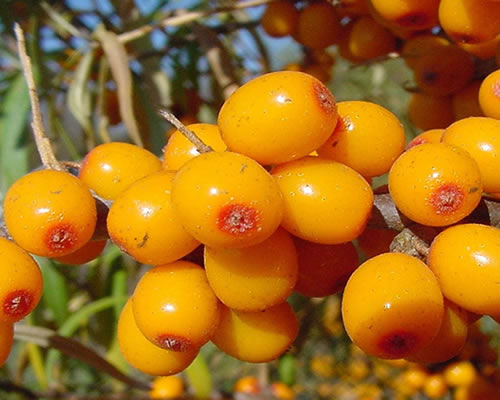
Plant of the Weekish - Seabuckthorn

Seabuckthorn

Seabuckthorn, or seaberry, originates on the coastlines of Asia, and the semi-arid areas on Mongolia and Russia.

The shrub grows to about 20 ft tall and lives for approximately 40 years. It has a very dense and thorny foliage, which makes a great habitat for birds and small mammals.

Seabuckthorn is not a leguminous tree, but it does fix nitrogen in the soil, which makes it a valuable support species in cold climates.

An 8 to 10 year old forest fixes around 165 lb per acre every year, which is a little more than your average field of clover.

The root systems are also very extensive. For example, a 5 year old plant has a tap root going down 10 feet.

Another benefit of this tree is that it coppices well, which means that you can cut off the branches, and it will grow back quickly and vigorously. Doing so releases Nitrogen into the soil vial root self-pruning, while the stick wood has a combustion heat equivalent to oak (superior of birch and alder).

The leaf foliage of the seabuckthorn make an excellent high protein fodder for animals, while the berries are a very nutritious food for both humans and animals, making them a sought after commodity in the health food sector.


The wood is hard, and makes good firewood although I have not heard of anyone using it in woodworking.

Generally regarded as invasive in parts of Canada, it is this very nature of vigorous growth that makes it such a valuable plant in the cold climate permaculture arsenal.

This "beneficial invasiveness" translates to a short coppice / firewood cycle, meaning that more firewood can be harvested in a shorter period of time. It also means that harvesting the berries by cutting off branches is a viable option.

Seabuckthorn is a very effective animal barrier while at the same time a valuable animal shelter. It's great at keeping deer out of gardens, and young children away from potentially dangerous bodies of water.

In an industrial, mono-crop operation this plant can indeed become a problem because it's not suited to that sort of environment, however, where this plant is utilised and managed for its many beneficial properties within a highly interconnected ecosystem, then it becomes an asset.

Be it for windbreaks, erosion control, hedges, or forage, the Seabuckthorn deserves to sit near the top of not just the Canadian invasive species list, but the top of the Canadian permaculture tree species list as well.

The B.C. government published a nice fact sheet in 2001 that contains lots of good information on propagating and managing this tree.

For people looking to grow this tree, be aware that you need both male and female plants for seabuckthorn to fruit and propagate. Growing from seed is certainly possible, however you need to cold stratify them before planting.

Once you have a few trees growing, multiplying them through transplanting the numerous basal shoots, or suckers that the growing tree produces.

Monday, July 28, 2014

Plant of the Weekish - Black Locust

Black Locust

Thunder Bay winters are cold and long as we all know well enough. As a result, there are not a lot of tree species that do well in this climate compared to other parts of the world.

One valuable plant in the permaculture toolbox is Black Locust. In permaculture, every aspect of a design system is employed to perform multiple functions, and Black Locust offers many.

Firstly, this tree is a very fast growing legume. The jury is still out with regards to whether or not this tree fixes Nitrogen in the soil, but in the opinion of many leading permaculturists around the world, it does.

Not only is it a long term support species for a food forest - providing nitrogen rich mulch via chop n' drop, the wood is extremely hard and resistant to rot once it dries. This means that the wood is great for making tool handles and fence posts.

The tree also coppices well, which means that it can be cut back periodically and the wood used as firewood for efficient and sustainable heating solutions like a rocket mass heater

As a fire wood, this tree produces one of the highest BTU ratings and on a par with oak. It puts out significantly more heat than anything else capable of growing in our climate.

The foliage and seed pods of the black locust make great animal fodder (the seed pods are edible by humans), and the dried seeds can be used as chicken feed. 

Black locust produces abundant flowers that bloom in the spring are a favourite fodder for bees. The resulting honey is light, mild, and does not readily crystallize. In other words, it produces high quality honey.

Black locust puts on foliage late in the spring, which means that under-story plants get a good dose of spring sun.

Black locust is a rather thorny tree, which makes it difficult to handle, but on the positive side, it makes for effective animal barriers, and bird nesting habitat.


Considering all the benefits that black locust brings to a cold climate permaculture system, this tree is a very valuable asset.

Monday, July 21, 2014

Plant of the Weekish - Cattail

Cattail

Typha, or cattails as we commonly refer to them, seem to grow everywhere there is a ditch, pond, or piece of boggy ground. In other words, Cattails seem to grow all over the Thunder Bay region.

Commonly viewed of as a weed and more of a nuisance than anything else, the permaculturist sees the humble cattail as a valuable and hard working native plant.

The reason for this viewpoint is the multiple roles that Typha plays in the ecosystem. As a fast growing wetland plant, it provides shelter for many different birds, insects, and reptiles.

This plant produces one of the largest root masses of any known plant, and that root mass acts as a huge water filter in the wetland environment.

Typha produces copious amounts of easily collectable pollen that can be used in baking, as well as a protein source for honey bees.

In fact the entire plant is edible, although chomping down on those fluffy seed heads isn't exactly pleasant! That said, the fluffy seed heads provide good materials for stuffing and insulation (During WW II, several million pounds of them were used to stuff life jackets, mattresses, pillows and baseballs) .

The greatest potential for Typha in my opinion is in it's commercial application for feeding pigs.

That root mass I mentioned is very high in starch, and an acre of cattails will yield in the order of 140 tons of root mass. To put that in perspective, cattails are capable of producing ten times the amount of edible root as potatoes.

There is enough food in the root mass of 1 acre of cattail to raise approximately 100 pigs to maturity without any other external feed inputs.

But why pigs? If there are three things that pigs just love to do, they are:

  1. Eat
  2. Dig
  3. Roll in mud

Since cattails thrive in swampy areas, this is as close to pig nirvana as I think one can find on this earth.

Applying pigs to a Typha choked land results in a nicely cleared and freshly fertilized area ready for planting, fat happy pigs, and a handy revenue stream for the permaculture farmer.

Thursday, July 17, 2014

Plant of the Weekish - Dandelion

Dandelion

If Thunder Bay had an official flower, I would have to vote for the dandelion!


The first welcome colours of spring are dominated for a few weeks by a golden carpet of these yellow flowers that seemingly grow in successful defiance of every dedicated gardener and lawn tenderer in town.


Officially classified as a weed, permaculturists classify the dandelion as a valuable pioneer species that works hard within the landscape to amend various soil deficiencies, and make way for a more sophisticated and stable ecosystem.


Dandelions have a deep penetrating tap root that brings nutrients to the surface. When the plant dies back, these nutrients are released to other soil life.


The presence of this plant indicate specific soil conditions such as:
  • Low PH
  • Low Calcium
  • High Potassium
  • High Chlorine
  • Compacted Soil

Coincidentally (not), the penetrating tap root of this plant acts to mechanically loosen the soil, and bring Calcium (which is an alkalising agent) to the surface.


Not only are dandelions important functionally in the landscape but they are an essential early food source for hungry bees as they come out of the long Northern winter.


Dandelions are also entirely edible, and have medicinal applications which are commercially valuable. For example, the U.S.A is known to import 45 tonnes of dandelion in a year for use in medication alone. People even grow it and sell it for its culinary / medicinal purposes, such as Michael Pilarski here in this video:

According to Agriculture and Agri-Food Canada, a hectare of dandelions yields at least 100 Kg of roots and 18,000 Kg of leaves. At $26.50 per Kg for roots, and $3.25 per Kg for fresh leaves, there seems to be a potential business opportunity just waiting for an enterprising soul. There is also a ready market for flower infused oils...


So the next time you look at the dandelion, remember what it’s telling you about your lawn. Let the bees feed off of it while it’s in flower, and then eat it yourself!
http://allrecipes.com/recipe/dandelion-greens-with-a-kick/